
How STEM Enrichment Can Prepare Students for Future Scholarship Opportunities
STEM enrichment is about a lot more than just adding extra academic practice for Singapore students. With hands-on science, technology, engineering, and mathematics projects, kids get to flex real-world skills like problem-solving, teamwork, and communication. Scholarship committees? They tend to notice those things—especially when students show off applied learning skills that go beyond textbooks.
The right STEM enrichment program can help students build scholarship-ready skills and demonstrate initiative, curiosity, and a genuine, long-term interest in STEM education. Whether it’s hands-on challenges, research projects, competitions, or industry exposure, these experiences help bridge the gap between classroom theory and what’s actually needed out in the world.
Strong applications don’t just list activities—they highlight what students actually did, what they learned, and how their STEM journey shaped their goals. That’s the stuff that stands out.
Building Scholarship-Ready Skills Through STEM Enrichment
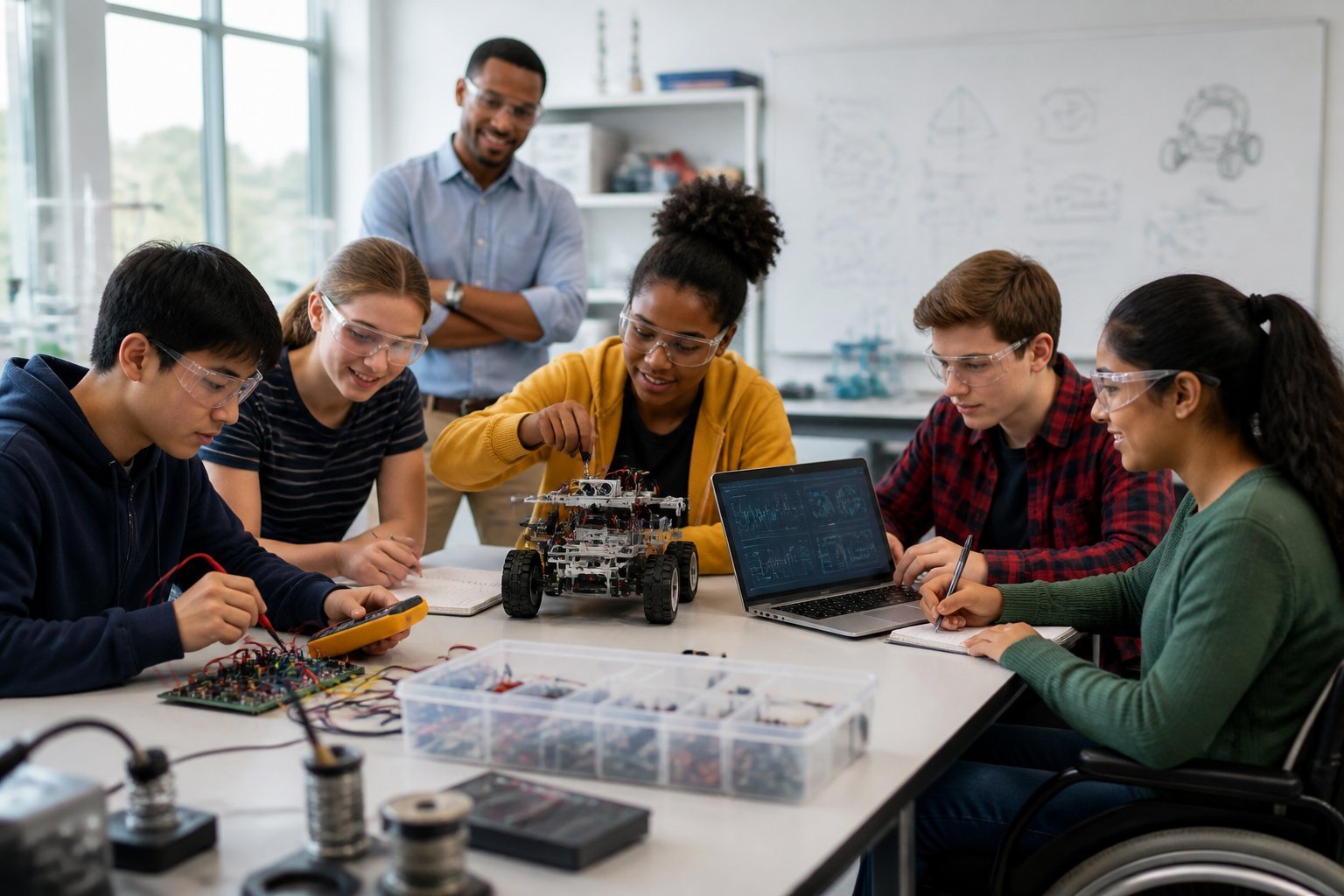
Through STEM enrichment, students get a chance to show real evidence of problem-solving, technical ability, creativity, and teamwork. The best programmes connect classroom concepts with projects, competitions, research, and community challenges that actually strengthen a scholarship application.
Demonstrating Problem-Solving and Critical Thinking
Scholarship panels aren’t just after grades—they want to see students who can define a problem, weigh evidence, compare ideas, and justify their solutions. STEM enrichment really puts these skills to the test through investigations, design challenges, robotics, and experiments that go way beyond just memorising facts.
It helps if students document how they spotted a problem, tested out solutions, made sense of the results, and improved their approach along the way. Maybe a student compares materials for a low-cost water filter, analyses the outcomes, and explains why one design worked better. That sort of detail matters.
Critical thinking also means asking tough questions. Students need to sort out reliable data from the noise, spot flaws in experiments, and admit when a solution creates new issues or trade-offs. These habits show mature problem-solving skills—and, honestly, make for much stronger essays and interviews.
Developing Coding, Computational Thinking, and Digital Literacy
Coding programmes introduce students to programming basics—variables, conditions, loops, functions, debugging, the usual suspects. But more than that, they teach kids to break big tasks into manageable steps and write precise instructions, which is really about computational thinking and algorithms.
These skills come alive in Python projects, web apps, robotics, or data visualisation. For example, analysing local temperature records can blend computer science, coding, data analysis, and even a bit of uncertainty interpretation (because, let’s face it, data’s never perfect).
Digital literacy isn’t just about clicking around on a computer. Students should get how to judge online info, protect their data, use tech responsibly, and explain how automated systems tick. Intro AI activities can open their eyes to issues like training data, bias, accuracy, and ethics—so they don’t just treat AI like some magic black box.
Strengthening Creativity, Resilience, and Collaboration
STEM enrichment is a playground for designing, revising, and testing new ideas. Open-ended projects really spark creative thinking because there’s rarely just one right answer—students have to figure out their own way.
And let’s be real: projects almost never work perfectly on the first try. When a prototype flops, students dig into what went wrong, tweak it, and try again. That’s where resilience and a growth mindset kick in, especially when mentors value improvement and persistence just as much as the final result.
Team-based programmes? They push students to communicate and collaborate for real. Dividing up research, managing timelines, settling technical disagreements, and presenting findings—these are the moments when students shine. Scholarship applications get a boost when students can pinpoint their own contribution, talk about how the team handled setbacks, and show real teamwork.
Applying STEM Learning to Real-World Challenges
Learning gets a lot more meaningful when students tackle real needs. Maybe a team designs a solar-powered gadget, models household energy use, tracks water quality, or studies urban biodiversity. These projects tie together renewable energy, environmental science, engineering, measurement, and data analysis.
But real-world solutions aren’t just about technical brilliance. There’s cost, safety, accessibility, and environmental impact to weigh up. Sometimes the “best” design needs a rethink if it’s too expensive or just doesn’t fit the users.
It’s worth keeping a detailed record—research sources, raw data, design tweaks, test results, feedback. A portfolio like that can show how someone applied STEM knowledge to a community issue or global challenge, all while building practical judgement and social awareness.
Turning STEM Experiences Into Strong Scholarship Evidence
Strong scholarship evidence isn’t just a checklist of activities. It’s about showing how students built skills, overcame challenges, documented their journey, and connected STEM learning with future study or career dreams.
Choosing Age-Appropriate Projects and Progression Pathways
It’s smart for students to pick projects that fit their current skills but also give them room to grow. Younger kids might dive into shapes, simple machines, unplugged coding, Scratch, biology observations, or conservation activities. These early experiences build curiosity, fine motor skills, sequencing, and basic scientific thinking—no fancy gear required.
As students move up through the STEM curriculum, they can tackle Python, electronics, physics investigations, robotics, and digital creation. High schoolers might design an energy monitor, analyse water quality, or build a robotic prototype. For each project, it helps to record the question, method, changes, results, and a bit of reflection.
A clear progression pathway gives both schools and scholarship panels solid proof of growth. Plus, it shows adaptability—students who identify weaknesses, seek out new knowledge, and improve their work, rather than just showing off a polished final product.
Building a Portfolio Through Competitions, Workshops, and Maker Projects
A well-organised portfolio can turn STEM enrichment into solid, verifiable evidence. Students might include project photos, code snippets, design sketches, test data, certificates, competition feedback, and short reflections explaining their decisions. For clarity, a table can link each activity to the skill it demonstrates:
| Evidence | Skills demonstrated |
|---|---|
| Robotics competition | Teamwork, programming, problem-solving |
| STEM workshop | Technical learning and initiative |
| Maker-space prototype | Design, testing, and iteration |
| Biology investigation | Data collection and scientific communication |
Competitions show how students perform under pressure, while workshops highlight a willingness to learn outside regular classes. Maker spaces? They’re great for building and tinkering with electronics, mechanical parts, or even recycled stuff.
It’s best not to just rattle off a list of activities. A short reflection should explain the problem tackled, what the student actually did, what didn’t work, and how the project evolved. Projects that cross boundaries—mixing science, engineering, arts, or meeting community needs—can really showcase creativity and broad thinking.
Connecting Enrichment to Singapore Scholarship Pathways
For students eyeing Singapore scholarships, it’s important to connect STEM experiences to what a particular school, institution, or scholarship provider is actually looking for. The Ministry of Education (MOE), Singapore Economic Development Board (EDB), universities, and industry-linked programmes all have their own priorities—often blending academic performance with leadership, initiative, communication, and potential for contributing to the STEM community.
A strong portfolio should link enrichment to a clear direction, like robotics engineering, data science, medicine, environmental science, or another STEM field. Students don’t have to lock themselves into a single career, but it helps to explain how projects shaped their interests and honed relevant skills.
Don’t forget to check current eligibility rules, deadlines, required documents, and selection criteria—these can vary a lot. Evidence from a school STEM programme, science competition, research project, or community conservation effort becomes much more compelling when students describe their real responsibilities and what they learned along the way.
Seeking Mentorship, Internships, and Industry Exposure
Mentorship programs, internships, and just getting some real-world industry exposure—these are all ways students can start to see how the stuff they learn in class actually plays out in the workplace. A good mentor might help a student work through experimental design, Python code that refuses to cooperate, robotics mishaps, or even just getting more comfortable with technical communication. It’s worth jotting down meeting goals, advice, and any tweaks made to your project along the way, even if it feels tedious sometimes.
Internships and job-shadowing shouldn’t just be about showing up. Ideally, students walk away with something to show for it—maybe a write-up about a supervised task, a tricky workplace problem, or a new safety practice, while obviously keeping any sensitive info private. Honest feedback from a teacher, mentor, or even a lab supervisor can go a long way in showing you’re reliable and actually contributing.
There’s also presenting your research, writing up technical reports, teaming up with others, and trying to explain complicated results to people who aren’t specialists. These things show you can communicate and adapt—qualities scholarship panels (and, let’s be honest, most employers) are always hunting for when they’re deciding if you’re ready for a tough STEM path.