
Top 5 Ways to Help Kids Improve Their Maths Problem-Solving Skills at Home
Sure, lots of kids can crunch numbers, but when a maths problem asks for more than just calculation—like figuring out what to do next—they sometimes freeze. Real problem-solving is about understanding what’s being asked, picking a good strategy, explaining your thinking, and then pausing to check if the answer actually fits.
Kids get better at maths problem-solving when they practise making sense of problems, thinking out loud, and tackling challenges that actually mean something to them. Everyday activities—shopping, cooking, measuring, playing games, or even solving simple puzzles—can turn problem solving for kids into something practical, not just a worksheet chore.
The five ideas here are for families and teachers who want to help kids build real mathematical thinking—without making practice a bore. Each tip aims to boost confidence, especially when kids hit those tricky, unfamiliar problems that tend to stump them.
Five Practical Ways to Build Stronger Mathematical Thinking
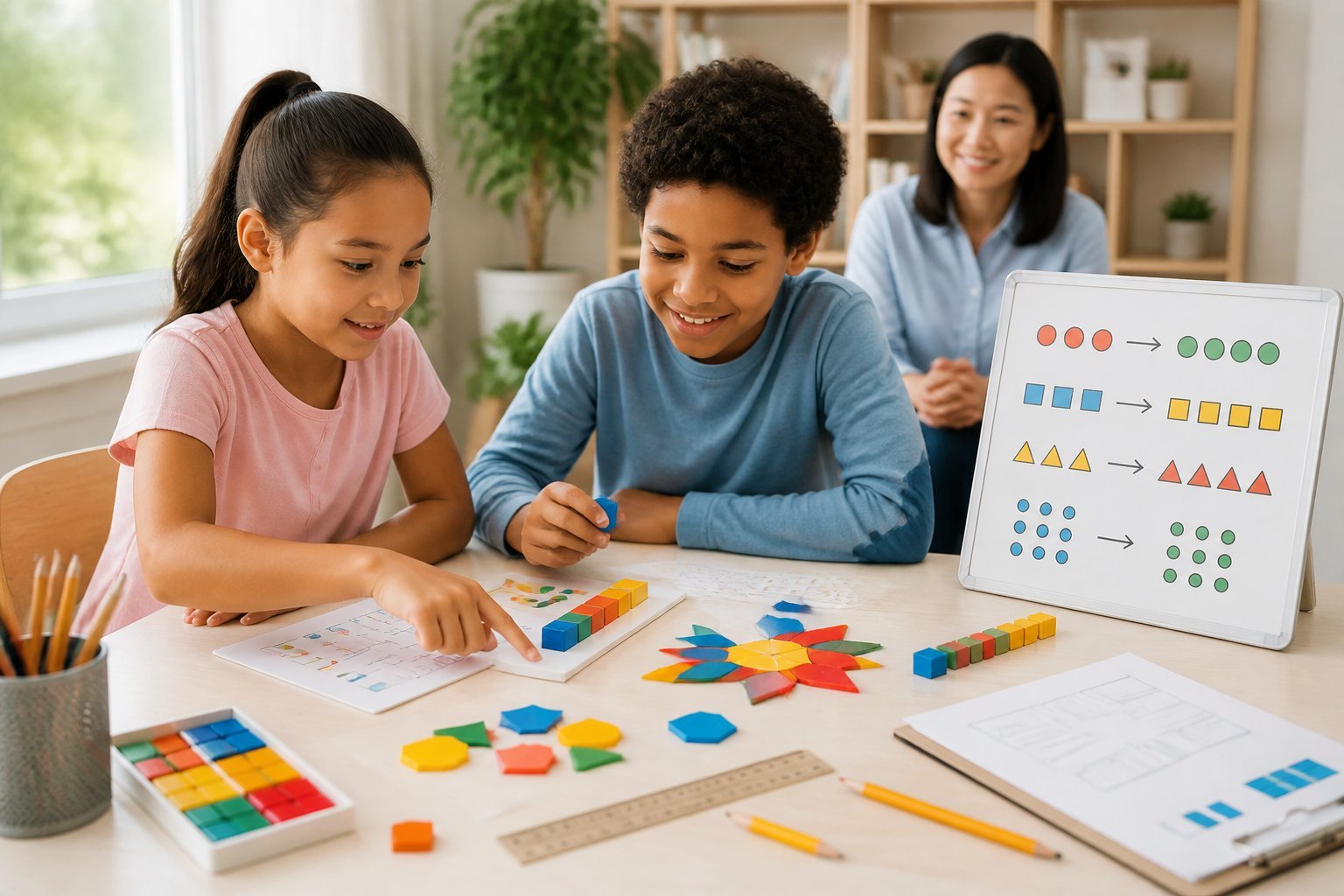
Kids really grow as problem-solvers when they practise making sense of situations, picking strategies that fit, showing their ideas, and checking their work. Regular practice with mental maths, open-ended questions, and real-world problems also builds flexibility, critical thinking, and a bit of healthy confidence.
Teach a Simple Understand, Plan, Solve, and Check Routine
Having a go-to routine helps kids break problems down instead of getting overwhelmed. Start by figuring out what the question is really asking, picking out the key info, and deciding if they need to find an amount, compare things, or explain a relationship.
Then, before diving in, they should plan their approach. Maybe they’ll draw a picture, use a bar model, number line, table, or just recall a fact. It’s worth asking, “What do you know?”, “What’s missing?”, or “How could you show this?”
When it’s time to solve, encourage kids to write down their steps instead of just guessing. Afterwards, a quick sense-check—maybe estimate, try the inverse, or use a different method—helps spot mistakes. This routine isn’t just about getting answers; it’s about thinking about your own thinking, which, honestly, is a skill for life.
Use Drawings, Bar Models, Number Lines, and Manipulatives
Visuals and hands-on tools make tricky relationships easier to see. If a problem is about comparing, a kid might draw two bars, label what’s known, and mark the mystery bit instead of just picking an operation and hoping for the best.
Some handy representations:
- Drawings: Quick sketches of objects, groups, or actions.
- Bar models: Great for part-whole or comparing amounts.
- Number lines: Show order, distance, and help with addition/subtraction.
- Manipulatives: Things like counters or blocks for place value, fractions, arrays, and equal groups.
The key is connecting these visuals to a maths sentence. Counters might show three groups of four, an array can show the same, and then you write (3 × 4 = 12). Over time, try to wean kids off the physical stuff, but keep diagrams around if they help make sense of things.
Build Flexible Strategies Through Mental Maths and Estimation
Fluency matters—when kids aren’t bogged down by basic calculations, they can focus on the bigger picture. Mental maths isn’t just about speed; it’s about explaining how you got there.
Breaking numbers up, using facts they know, tweaking calculations, or spotting relationships—these all help. For example, to solve (39 + 26), a kid might think, “Wait, that’s (40 + 26 – 1).” Or use (6 × 5 = 30) to figure out (6 × 6).
Estimation is underrated. Before doing (198 ÷ 4), it helps to notice the answer should be around 50. Get kids comparing different ways to solve a problem and talking about which is quicker or makes more sense. That’s where flexible thinking and confidence really start to grow.
Practise With Meaningful Story Problems and Everyday Maths
Story problems connect maths to real life. They should mix things up—combining, comparing, finding groups, scaling, or figuring out what’s missing.
The best problems don’t just hand over the operation with a giveaway word. Take, “Four buses carry 46 children each. How many children can travel?”—kids have to spot the equal groups and pick multiplication.
Everyday maths is everywhere: shopping, cooking, travel, sports, or even managing classroom supplies. It helps when kids explain what each number means and check if their answer fits. Try changing a detail in the problem and ask how that changes the solution—it’s a sneaky way to boost reasoning skills.
Encourage Reflection, Perseverance, and a Growth Mindset
Kids need the chance to wrestle with problems and see mistakes as part of the process—not proof they “just aren’t maths people.” Growth mindset is about focusing on strategies, effort, and progress, not some magical talent.
Praise the process: checking answers, drawing a clear picture, or trying again after a dead end. Ask, “What did you already try?”, “Where did things go sideways?”, or “What could you switch up?”
Reflection really cements learning. After a problem, have kids jot down how they solved it, why it worked, and maybe another way it could have been done. Chatting with a partner, pausing to think, or using sentence starters like “I noticed…” or “My answer is reasonable because…” all help build communication, perseverance, and real mathematical reasoning.
Make Problem-Solving Practice Engaging and Relevant
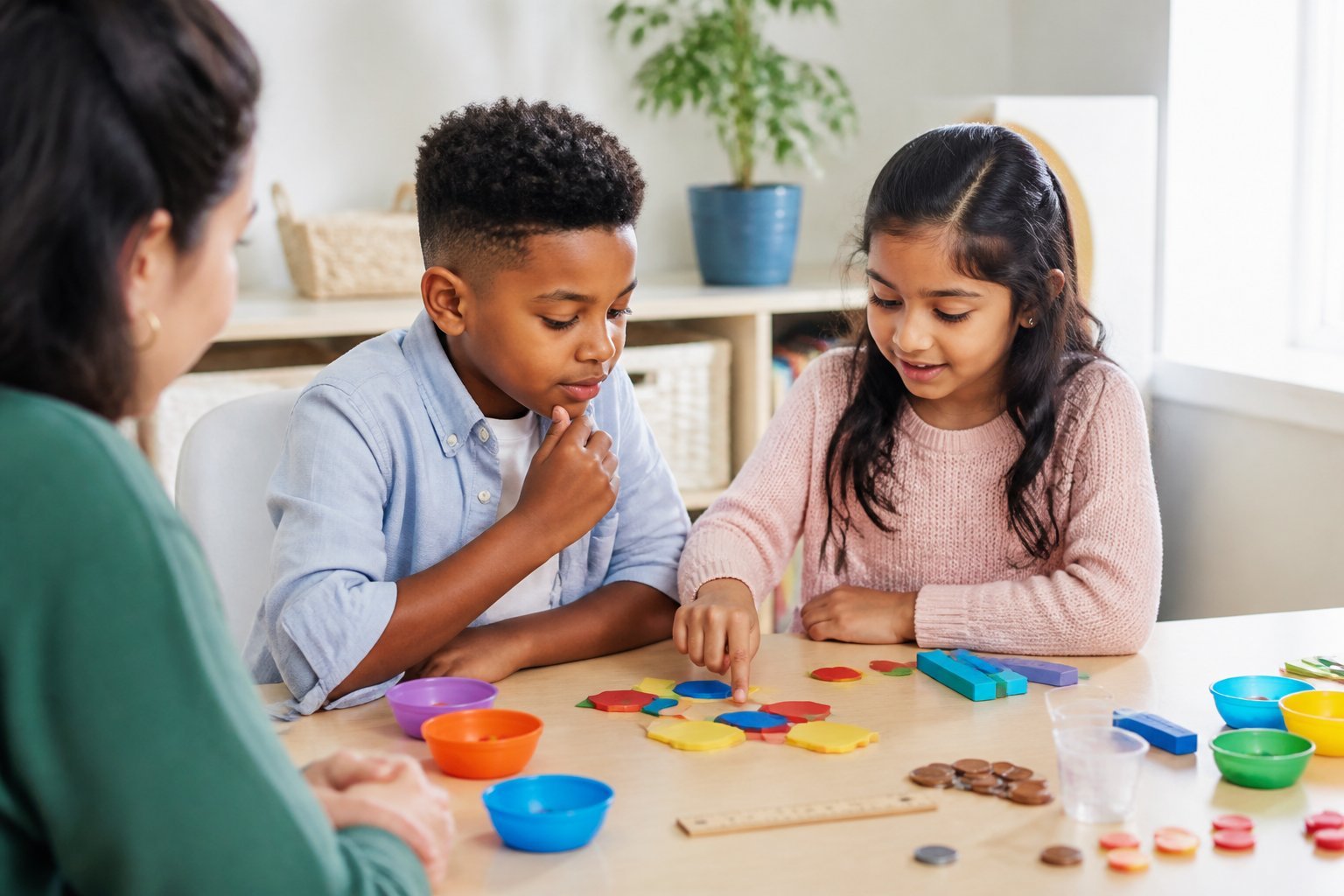
Kids stick with maths longer when it feels like it matters and actually connects to their interests. Games, everyday activities, curriculum-based challenges, and even the right digital tools can help them use arithmetic and reasoning in all sorts of situations.
Use Games and Puzzles to Strengthen Logic
Games are a lifesaver—kids get loads of practice, but it doesn’t feel like just another worksheet. Card games can sneak in counting, addition, subtraction, multiplication, fractions, decimals, and percentages. Board games? Great for arithmetic, budgeting, and decision-making.
Puzzles are another win. Sudoku sharpens deduction and pattern-spotting; tangrams bring in geometry and spatial reasoning; number puzzles get kids testing strategies, not just guessing. Pattern games can use shapes, colours, numbers, or tables—whatever keeps interest up.
Ask kids to talk through their thinking. “What pattern did you spot?” or “Can you find a different way?”—those questions turn play into real maths learning.
Connect Maths to Cooking, Shopping, and Budgeting
Everyday stuff is packed with maths if you look. Cooking? Kids can measure, double or halve recipes, compare fractions, convert units, and figure out timing. Playing with ratios and proportions is easy—just change the number of servings.
Shopping is full of practical maths. Kids might compare prices, work out discounts, estimate totals, calculate change, or decide which deal is best. Even a simple weekly budget can bring in addition, subtraction, decimals, percentages, and basic stats.
Let kids guess first, then check. If the numbers don’t add up, have them look back at the measurements or the method. It’s all part of learning to spot mistakes and fix them.
Match Activities to Your Child’s Current Maths Topics
Practice sticks best when it builds on what kids are already learning, but with a bit of extra challenge. Working on multiplication? Try arranging counters in arrays, making times-table patterns, or finding the area of objects around the house. Fractions? Divide up food or compare fractions on a number line.
Older kids can use decimals and percentages for shopping, ratios for recipes, algebra for unknowns, and geometry for room layouts. Measuring things—length, mass, volume, area, angles—can be done with stuff around the house.
It’s worth checking what your child’s class is covering before picking an activity. If something throws in too many new ideas at once, it might end up being more about reading or vocabulary than actual problem-solving in maths.
Choose Digital Practice Tools With Purpose
Digital platforms can be handy when they actually support a clear learning goal. For example, Khan Academy Kids is pretty good for helping younger kids pick up counting and basic arithmetic, while Prodigy turns maths practice into a bit of a game—great for kids who need that extra bit of engagement.
It’s worth picking activities that fit the child’s age, what they’re learning, and where they’re at right now. Ideally, the tool nudges kids to talk through their thinking, look back at mistakes, and try out different problem-solving approaches—not just zip through questions for quick rewards. If you find it difficult to teach your own kids, consider getting a private math tutor.
Honestly, shorter sessions tend to go further than just letting them use screens without limits. After a digital activity, maybe have your child tackle a similar problem on paper, with blocks, or by using something from daily life. That little step can make a real difference in helping them apply what they’ve learned off-screen.