7 Future-Ready Skills Children Develop Through STEM
STEM activities spark skills that really matter—not just in school, but in day-to-day life and, honestly, whatever careers might look like in the future. With hands-on STEM learning, kids get to flex their problem-solving, creativity, digital know-how, communication, teamwork, adaptability, and even that tricky evidence-based decision-making muscle.
Those abilities? They’re not just for future engineers—they help in a world that’s constantly shifting, where tech keeps evolving and nobody really knows what’s coming next. When kids dive into practical projects, they see ideas turn into real things, and, honestly, that does wonders for their confidence. Sometimes things flop, sometimes they work, but either way, it’s all progress.
Here’s a closer look at how STEM doesn’t just sharpen thinking—it also builds the people skills kids are going to need, no matter where the future takes them.
Core Thinking and Digital Skills Built Through STEM
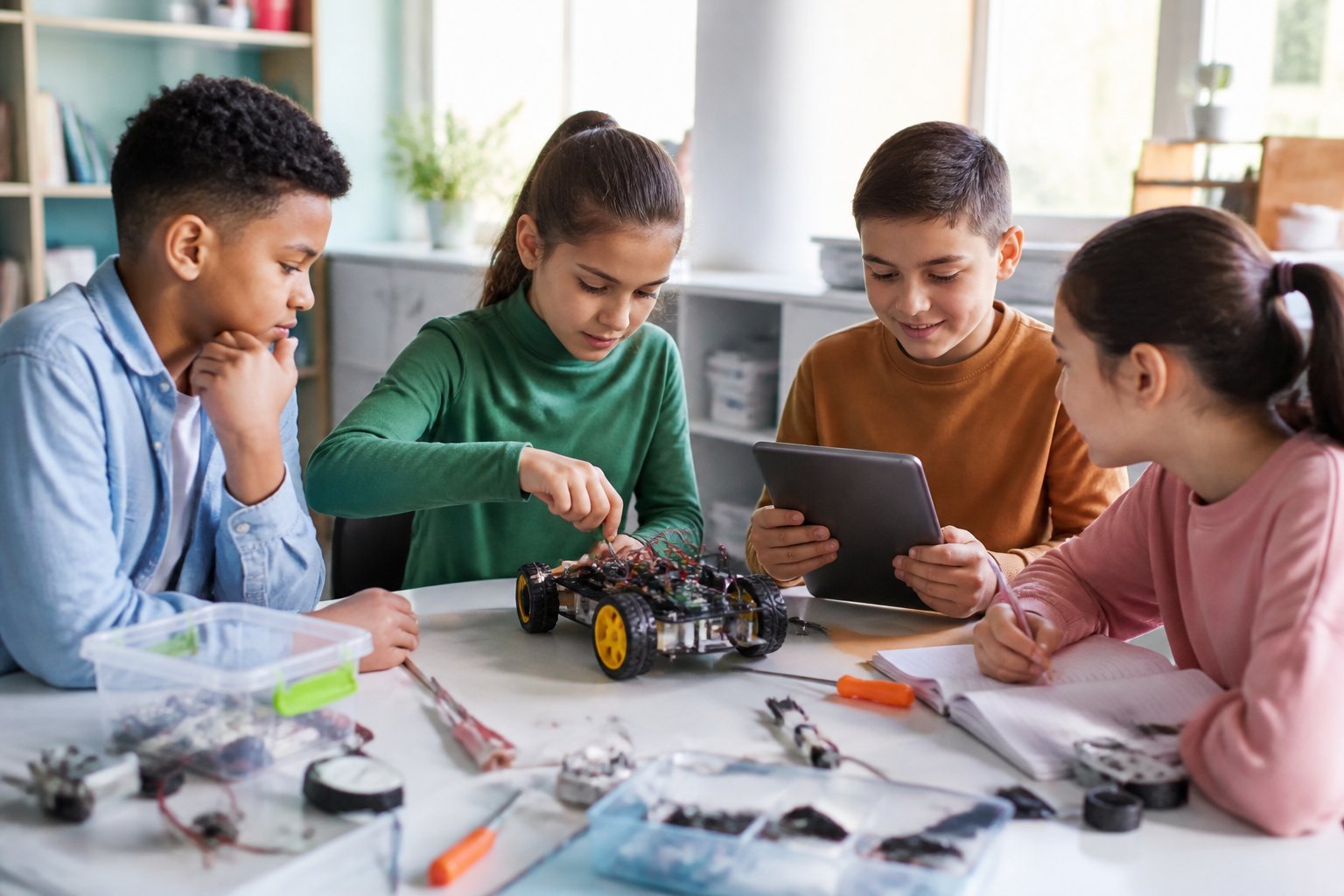
STEM projects get kids digging into evidence, testing their ideas, and tweaking their designs—usually with a fair bit of mess and a lot of learning. It’s a mashup of math, science, engineering, tech, and coding, all tangled up in decisions that actually matter, which is probably why it sticks better than worksheets ever could.
Critical Thinking and Problem-Solving
Kids stretch their critical thinking when they tackle a question, sift through info, and figure out how to put an idea to the test. Try building a bridge out of craft sticks—they’ll have to weigh different designs, guess which one holds up, and back up their choices with real evidence (or at least their best logic).
STEM turns problem solving into a habit. During project-based learning, kids break down a big challenge, prototype, test, and then—yep—start over. They learn fast that a mistake isn’t failure; it’s just feedback. And sometimes, the best plan is the one you change halfway through.
Design thinking gives some structure to all this tinkering. Kids might spot a need, brainstorm options, build a model, and ask for feedback. It’s not about getting it perfect on the first try (does anyone?). Instead, it’s about sticking with it and seeing how much better things get with a little persistence.
Creativity and Innovation
STEM’s a natural fit for creativity—give kids a few limits and a problem to solve, and they’ll surprise you. Whether it’s a water filter, a crash-proof egg drop container, or some wild energy-saving gadget, they’ve got to mix materials, science, and a bit of imagination to make it work (or at least look cool).
Innovation pops up when kids go beyond copying and start improving. Maybe they tilt a wind turbine blade, tweak a robot’s code, or swap out materials to see what happens. Every little change is a chance to connect creative thinking with real results.
Open-ended challenges keep things interesting. Kids sketch, debate, and use math to see what actually works. Turns out, creativity in STEM is equal parts wild ideas, experiments that flop, and figuring out how to turn a weird thought into something that does the job.
Digital Literacy and Computational Thinking
Digital literacy? It’s way more than just knowing how to tap a screen. Kids pick up how to choose the right tool, organize info, spot when something’s off, and protect their own data. And yeah, it’s probably time to talk about how artificial intelligence (AI) works, too—like, how it uses data, and why it’s not always right.
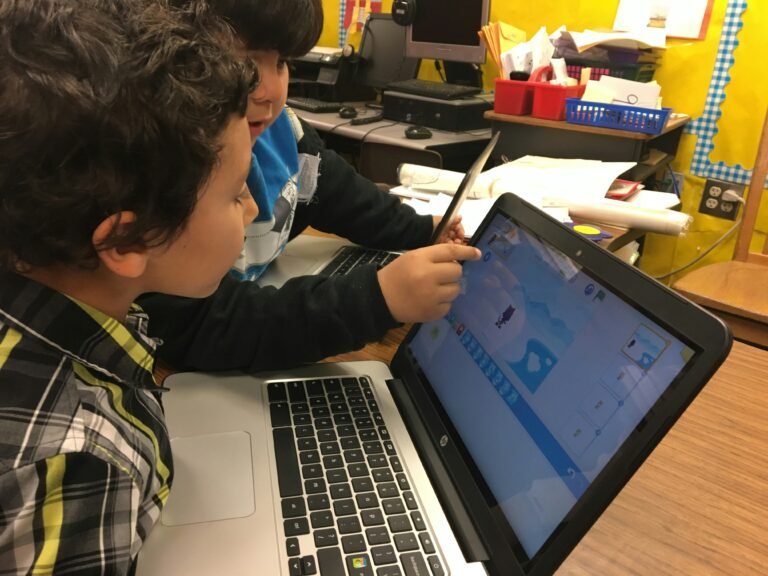
Computational thinking is about breaking big problems into bite-sized pieces. Kids learn to decompose tasks, spot patterns, make up rules or algorithms, and debug when things go sideways. Platforms like Scratch let them build games or animations, learning logic and sequences while having fun (or getting frustrated—both happen).
Computer science feels less abstract when code makes something move or light up. In Tinkercad, kids can model gadgets or tinker with circuits; in simulations, they mess with variables and see what changes. It’s hands-on, and honestly, that’s when tech skills start to stick.
Pattern Recognition and Spatial Reasoning
Spotting patterns helps kids notice what repeats, what changes, and what’s connected—whether it’s plant growth, number puzzles, or how a robot reacts to commands. Seeing these links lets them make smart guesses, and work smarter, not just harder.
Spatial reasoning is about understanding shapes, directions, and how stuff fits together. Building, reading diagrams, rotating 3D models, or even coding a character’s path all flex this muscle. It’s not just for future architects; it helps with math, design, and just figuring out how things work.
Kids build these skills by sorting, mapping, or building stuff—and then explaining what they did. Maybe they plan a robot’s route, guess where it’ll end up, and then test it. It’s all about connecting what they see with numbers, words, and a bit of trial and error.
Human Skills Strengthened by Hands-On Challenges
STEM isn’t just about tech—those hands-on projects also build skills you can use anywhere. Whether it’s experiments, robots, research, or design, kids get real practice with teamwork, bouncing back from setbacks, managing time, and taking charge of their own work.
Collaboration and Communication
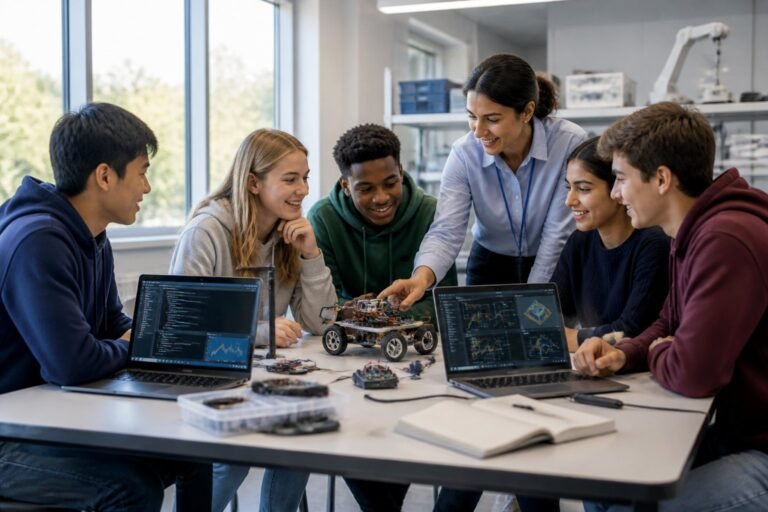
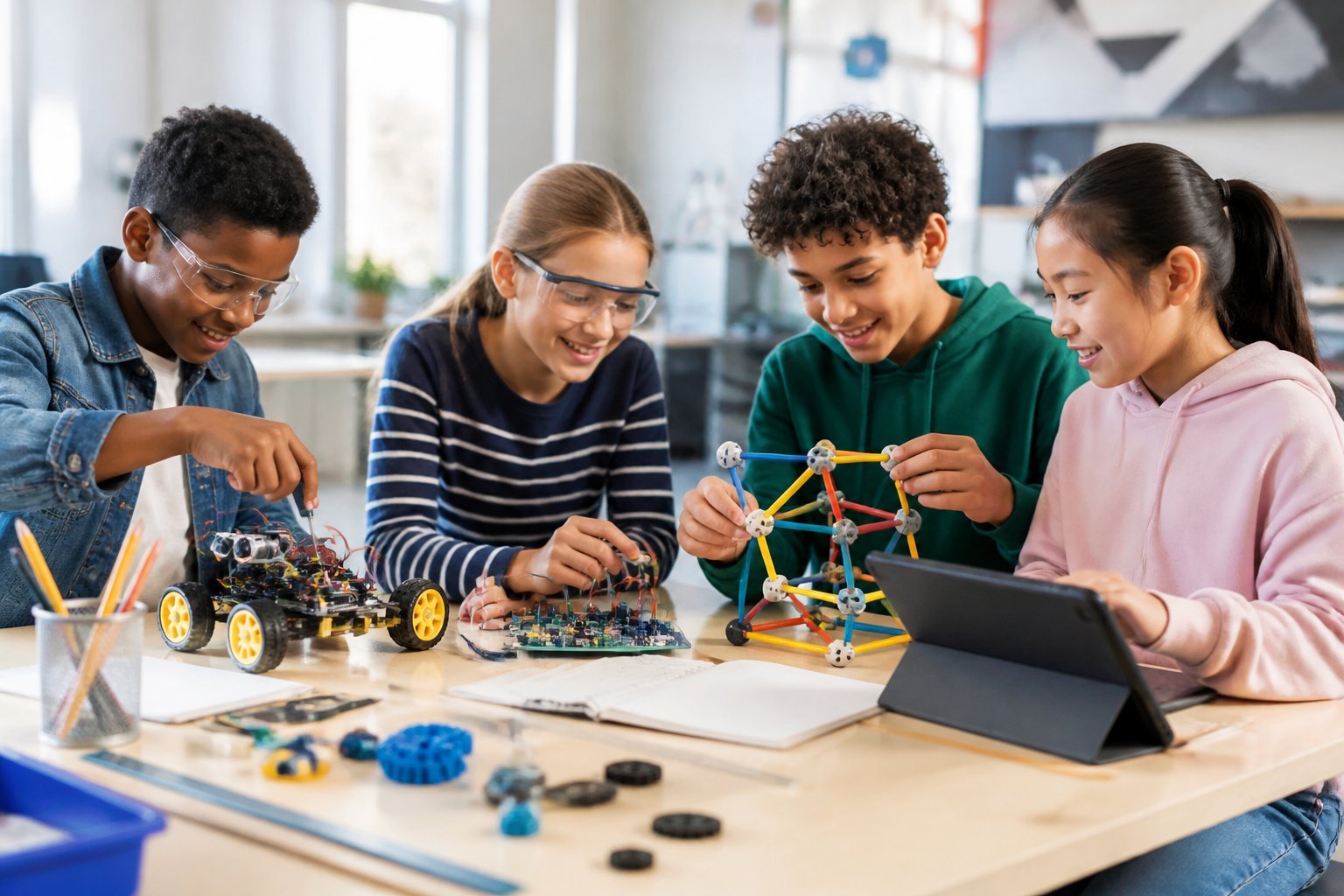
Team STEM projects? They’re a crash course in sharing the load, swapping ideas, and figuring out how to get along. Maybe one kid builds while another tests and keeps track of what’s happening. Everyone’s got to talk, listen, and actually do their part—or, well, things fall apart pretty fast.
They also learn to back up what they say with facts, not just opinions. Whether it’s weather data, biology, or something about sustainability, groups have to compare notes, argue it out, and agree on what story the evidence tells. Making a video, digital art project, or slideshow is just another way to practice getting their point across to different people.
Resilience, Adaptability, and Growth Mindset
Let’s be real—most experiments and builds don’t work perfectly the first time. Bridges collapse, robots go rogue, and science experiments sometimes just make a mess. But that’s how kids learn to treat mistakes as clues, not disasters.
Trying again (and again) builds persistence and the ability to roll with the punches. Instead of quitting, kids figure out what went wrong, tweak something, and give it another shot. That’s not just science—that’s life, and it’s exactly what they’ll need for the big, messy problems out there in the real world.
Confidence and Self-Management
Finishing a STEM activity gives kids something real to point to—proof that their effort actually moved the needle. When a child manages to program a robot, build a model that works, or even just explain what they discovered, you can almost see their confidence grow. It’s not just about getting praise; it’s about seeing what they can do with their own hands and brain.
These projects don’t just happen, either. Kids have to figure out instructions (sometimes not the clearest), hunt down materials, juggle what’s important, and try not to lose track of time. There are deadlines, sure, but there’s also that open-ended side where they get to make their own choices. Honestly, it’s a crash course in being organized and responsible. These habits aren’t just for tech stuff—they spill over into schoolwork, creative projects, and, who knows, maybe even bigger challenges down the road.