
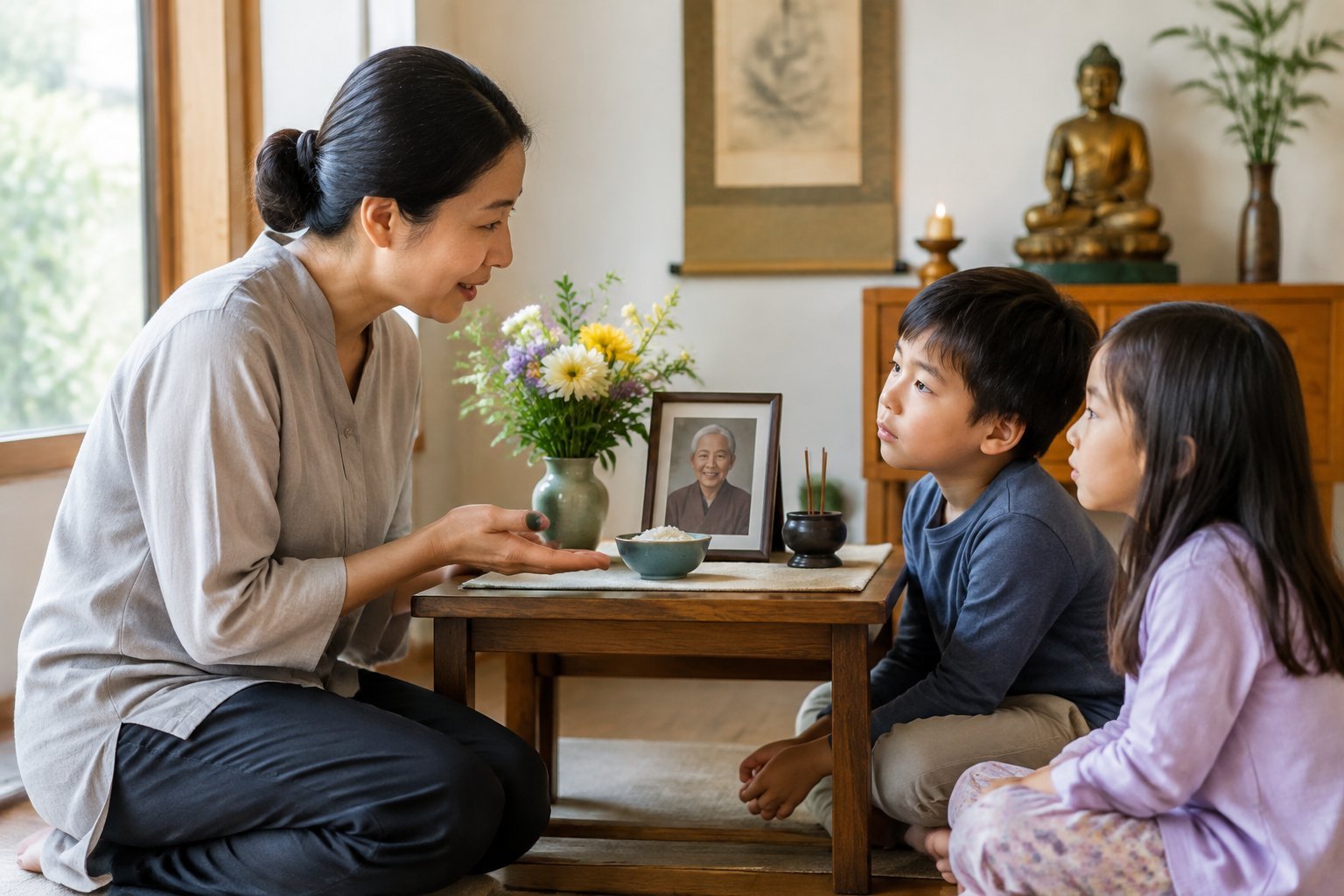
How to Explain Buddhist Funeral Customs to Young Children Gently
A death in the family changes a household overnight, and children notice before anyone sits them down to explain anything. They pick up on hushed phone calls, unfamiliar relatives arriving, and the particular quiet that settles over a home after a loss. Getting the words right before a Buddhist funeral matters less than getting them honest and simple.
Children handle the truth about death better when adults use plain words early, then connect those words to what they will actually see and hear at the wake. Singapore families often have only a day or two between a death and the wake, which leaves little time to plan what to say. Talking to a child about death and preparing them for Buddhist funeral customs work best as one conversation, not two separate ones.
This piece walks through what to say in the days before a Buddhist funeral service, how to prepare a child for the sounds and sights of a wake, and what support looks like once the rituals are over.
What Can You Tell a Child Before the Funeral?
A child needs a clear, truthful sentence about what has happened before any explanation of ritual or belief. Start with the fact of the death itself, then introduce Buddhist ideas like impermanence, karma, and rebirth as things the family believes rather than settled facts, since relatives often hold slightly different views on saṃsāra and what comes next.
How Do You Explain That Someone Has Died?
Say the person has died, using that word rather than “gone away” or “lost,” which can confuse a young child. A sentence like “Grandma’s body stopped working, and she died, so we won’t see her again” gives a four- or five-year-old something concrete to hold onto. Avoid saying the person is “sleeping” or “resting,” since that can make a child afraid of sleep.
What Do Buddhists Believe Happens After Death?
Many Buddhist families believe a person’s consciousness moves toward a new existence, a process some call rebirth, shaped by the karma built up during their life. It helps to frame this as a belief the family holds dear, not a claim about something a child can verify. A line like “Many Buddhists believe Grandma’s spirit will continue on in some way, and we do kind things now to help her on that journey” respects the tradition without promising certainty a child might later feel misled by.
Why Do People Chant, Offer Incense, and Give to Others?
Chanting, incense, and acts of generosity are ways mourners build merit, which many Buddhists believe can be transferred to support the person who died. Explain it plainly: “The monks are chanting prayers, and we’re giving food and flowers, because we believe it helps Grandma and shows our love for her.” Paper offerings, sometimes burned at the wake, follow the same logic of sending comfort and goods to the deceased. A child who understands the purpose behind incense smoke or monks’ voices is far less likely to find them frightening.
How Do You Explain Cremation and an Urn?
Cremation turns the body into ashes through intense heat, and those ashes are later placed in an urn, which may rest in a columbarium alongside other families’ urns. A simple explanation: “After the funeral, Grandma’s body will be turned to ashes in a very hot process called cremation, and the ashes go into a special container called an urn.” Some families also keep an ancestral tablet at home or at a temple, a small marker used for ongoing remembrance and offerings; a child can understand this as “a special place where we remember Grandma.”
What if Relatives Describe Death Differently?
Relatives may describe rebirth, spirits, or an afterlife in ways that differ from what a parent has already told a child, and that is worth naming in advance. Telling a child “Auntie might explain things a little differently than I do, and that’s okay, because families believe in different ways” prevents confusion from feeling like contradiction. It also opens the door for a child to ask follow-up questions without worrying that someone got it wrong.
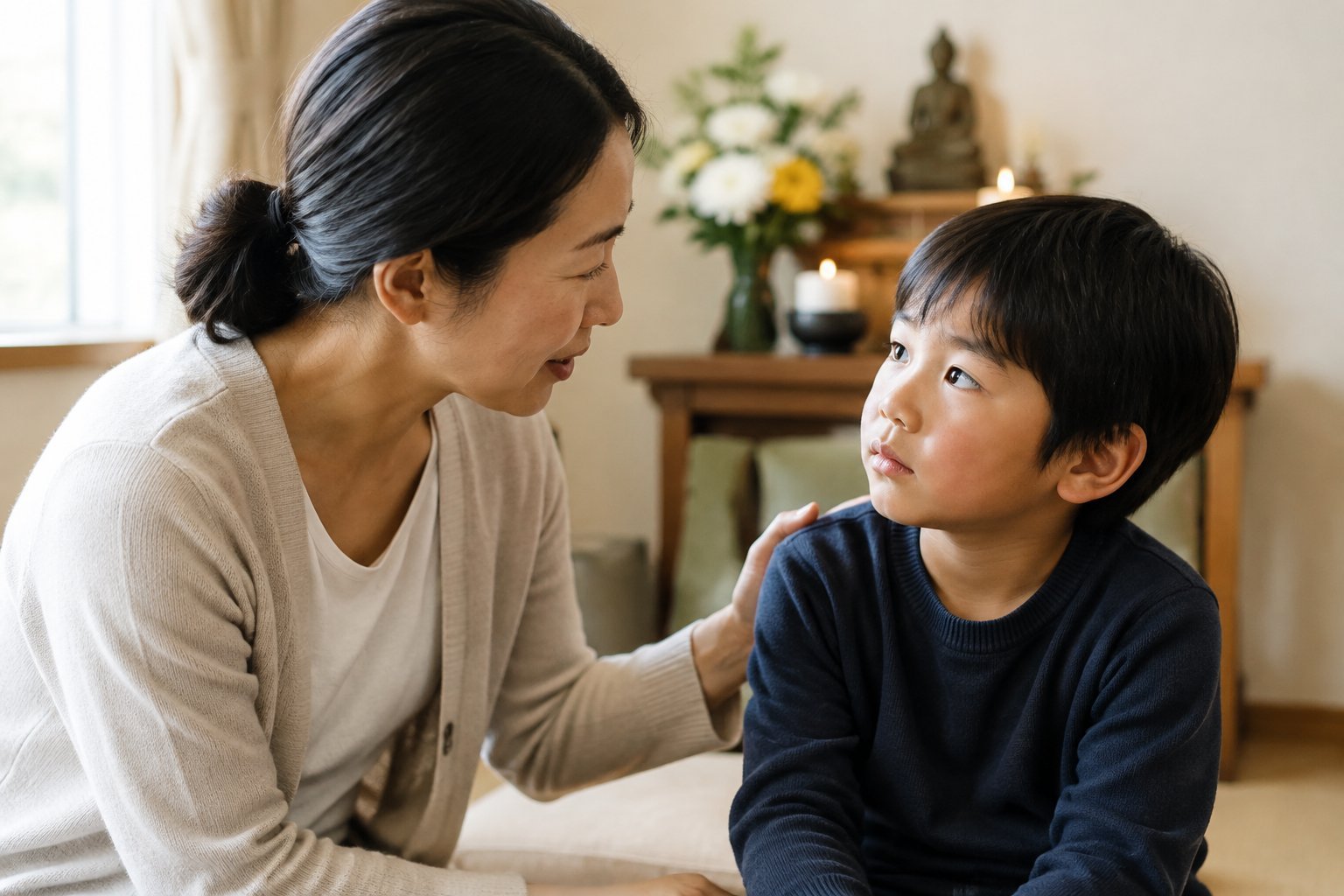
How Can You Help a Child Through the Wake and Afterward?
A Buddhist wake in Singapore involves sensory details a child has likely never encountered: chanting, incense smoke, an altar with photos and offerings, and sometimes an open casket. Preparing a child for these specifics, giving them real choices about participating, and watching for signs of prolonged distress afterward matter more than any single script of words.
What Will They See, Hear, and Smell at a Buddhist Wake?
A Buddhist wake typically includes a photo of the deceased on an altar, burning incense, offerings of fruit and flowers, and monks or family members chanting at intervals throughout the day. The smell of incense can be strong, and the chanting may sound unfamiliar or solemn to a child who has never heard it. Walking through these details beforehand, perhaps even showing a photo of a similar setup, reduces the shock of walking into an unfamiliar room. Families arranging a Buddhist wake arrangements with Harmony Funeral Care can also ask in advance what the specific setup will include, since practices vary between Theravada, Mahayana, and other traditions practised in Singapore.
Should Children Attend the Funeral?
Children can attend a Buddhist funeral service, and doing so with preparation tends to help more than it harms, though no child should be forced to go. The Ministry of Social and Family Development and groups such as SOS Singapore both note that excluding children from grief rituals entirely can leave them feeling confused or shut out of a shared family experience. The decision depends on the child’s age, temperament, and how the family feels about exposing them to viewing of the body, which some wakes include and others do not.
How Can They Take Part Without Feeling Pressured?
A child should be offered specific, small choices rather than a blanket decision about attending. Options might include:
- Placing a flower near the altar
- Lighting a joss stick with an adult’s help
- Sitting quietly nearby instead of standing close to the casket
- Staying in a separate room with a trusted relative for part of the wake
Asking “would you like to put a flower by Grandma’s photo, or would you rather stay with Auntie for a bit?” gives a child agency without forcing a decision they are not ready for.
What Should You Say After the Funeral?
After the cremation, keep the conversation open rather than treating the funeral as a closing chapter. A short check-in like “How are you feeling about Grandma today?” normalizes grief as something that continues, not something resolved by one ceremony. Some families observe a 49-day mourning period with periodic prayers; mentioning this to a child helps explain why relatives may still gather or visit a columbarium weeks later.
When Might a Grieving Child Need More Support?
A child who shows prolonged sleep problems, regression in behavior, or ongoing fear weeks after the funeral may need support beyond what a family can offer alone. The Ministry of Social and Family Development and SOS Singapore both provide guidance and counseling resources for families navigating grief, and a school counselor can also be a helpful first point of contact. Grief in children rarely follows a fixed timetable, so changes that persist for more than a few weeks, rather than the exact number of days, are the signal worth watching for.

Conclusion
Explaining a death to a child works best with plain words about what happened, followed by honest framing of Buddhist beliefs like rebirth and merit as things the family holds rather than certainties. Preparing a child for the specific sights and sounds of a wake, chanting, incense, an altar, and possibly an open casket, reduces fear more than any amount of reassurance alone. Letting a child choose how they participate, and staying attentive to how they’re coping weeks after the funeral, gives them steady footing through an experience most adults also find difficult to put into words.